Supported resources
Opal does not provision access in incident.io itself—the integration uses a
read-only API token. Instead, Opal automatically grants and revokes access to
the resources associated with the on-call schedule group for whoever is
currently on-call.
Opal always syncs access for whoever is currently on-call, including current
overrides.
1. Create a Incident.io token
Opal requires a “read-only” Incident.io API token. Go to your incident.io dashboard and create an API token.2. Create Incident.io App in Opal
In your inventory, click + App and search for incident.io. Connect to the incident.io native integration and add all necessary information, including the API token you created in step 1.3. Sync your Incident.io schedules
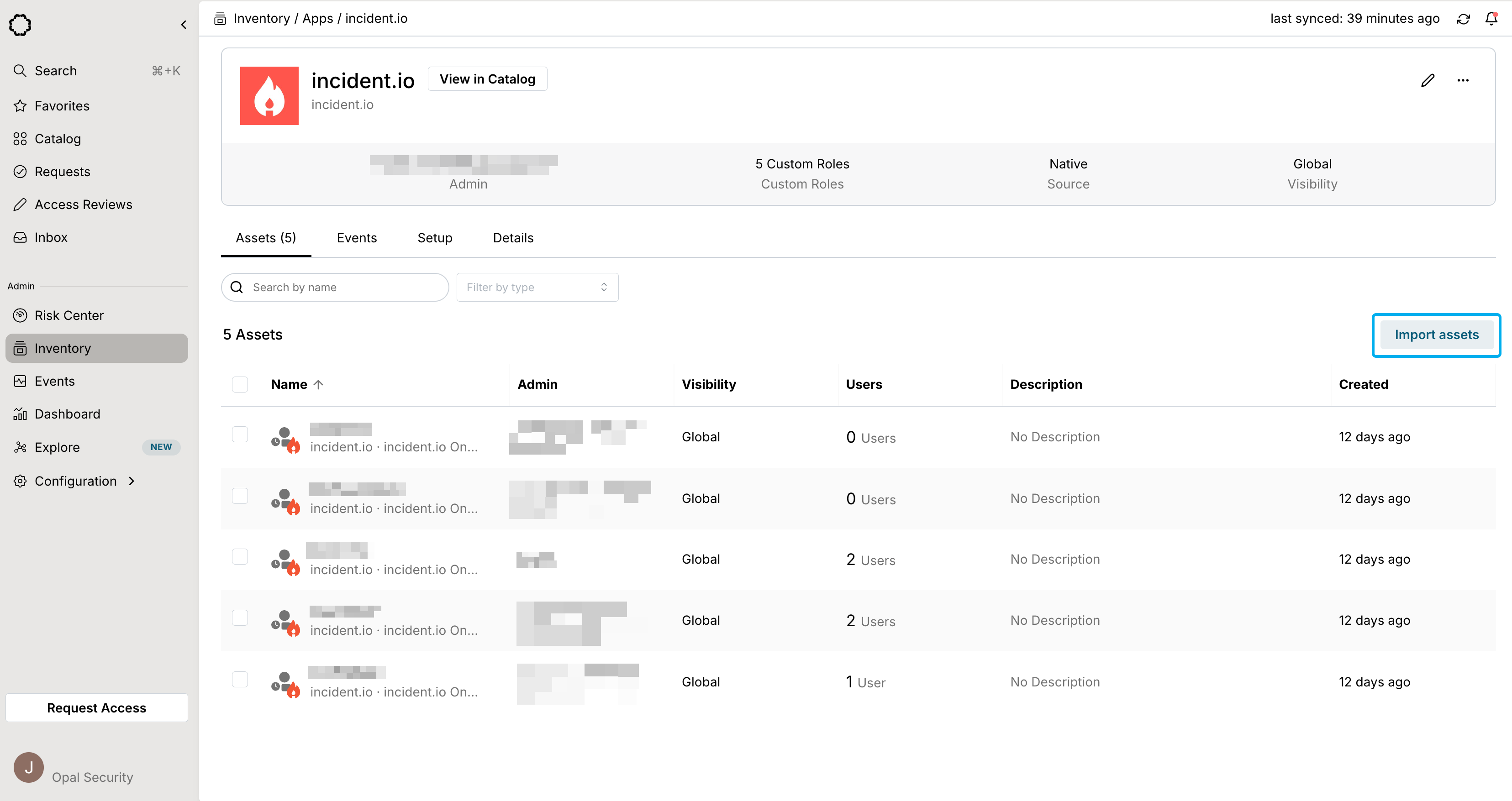
You can find your on-call schedules as a group under the Assets tab. To sync, click Import assets to add your schedules into Opal for management.